
How to Start a Podiatry Practice: The Ultimate Startup Checklist

As a podiatrist, you know that one’s foot and ankle health is central to their movement, independence, and quality of life. As populations age and rates of chronic conditions like diabetes increase, the demand for podiatric care continues to grow steadily.
At the same time, more people are participating in sports and high-impact activities, further increasing the need for specialized foot and lower-limb care. These demographic and lifestyle trends continue to reinforce podiatry as one of the more resilient and in-demand healthcare specialties.
If you’re just getting started, we have you covered. In this comprehensive guide, we’ll review everything you need to know about how to start a podiatry practice. We’ll also focus on how to set it up for long-term success and growth.
Preparation: Planning Your Clinical Path
Every successful surgery starts with a plan; your business is no different.
Determining Your Clinical Scope
General Podiatry vs. Specialized Care
For many, the first step to opening a podiatry clinic is defining your clinical focus. While some practitioners opt for incorporating general podiatry, others choose to specialize in a specific niche.
Niching down allows you to truly differentiate your practice and build stronger referral networks. For example, a diabetic-focused clinic can streamline protocols around wound care and vascular risk assessment, resulting in more structured and repeatable appointments.
Some common specializations include:
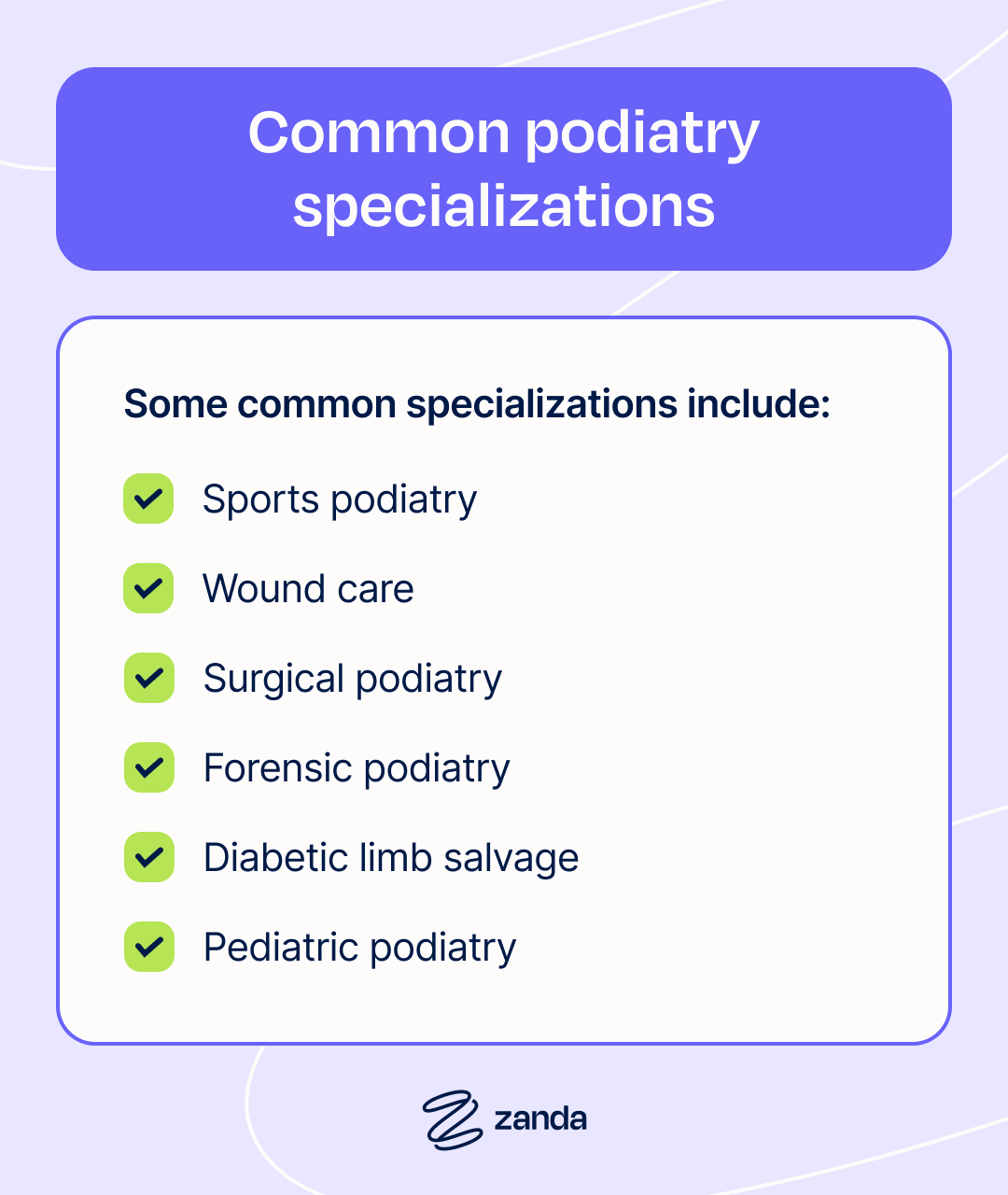
Every specialization will, of course, influence your marketing strategy and referral base. It will also impact your equipment needs and your greater podiatry business plan.
That said, staying general can also be advantageous, particularly in the earlier stages of opening a podiatry clinic. A general model can attract a wider patient base. This can help cultivate your initial caseload while the practice still grows its reputation. Some practitioners also prefer greater clinical variety, as it may reduce burnout and keep the day-to-day work feeling more diverse.

Hospital Privileges
If your scope includes any surgical procedures, it’s essential to secure hospital or surgery center privileges. This process can be lengthy, as it will include credential verification, documented clinical experience, and proof of adherence to facility-specific requirements.
Facilities generally require comprehensive credential verification, including:
- Proof of podiatric qualifications
- Copy of state licensure
- Board certification (if applicable)
- Professional references
- Documented clinical history
- Insurance coverage
- Any malpractice history
In many cases, the credentialing process entails multiple stages. Upon submitting your application, the committee will review your documentation and may extend provisional approval before granting full privileges. Because this process tends to take several months, it’s wise to approach it early in your podiatry business plan.
The good news is that securing such privileges can be a huge asset to your business. Being affiliated with a hospital or accredited surgery center can strengthen your professional credibility. Other providers may feel more confident referring patients to you, and patients might be secure in trusting you with their needs.
From a more practical standpoint, privileges can also increase your case diversity and clinical complexity. Accessing surgery facilities allows you to treat more conditions that cannot be managed in a standard clinic setting. This can broaden both your clinical depth and overall professional growth.
Legal and Regulatory Compliance
Licensing & Certifications
To legally operate a podiatry clinic, you must meet all state and regional board requirements. This includes your podiatry registration, continuing education obligations, and controlled substance registration if prescribing medications. Managing this compliance is an ongoing responsibility tied to all professional practice standards.
HIPAA & OSHA Standards
Podiatry clinics must adhere to all regulatory frameworks covering patient privacy and workplace safety. HIPAA governs the protection of patient health information (PHI). OSHA standards regulate infection control and workplace hazards, including:
- Sharps disposal
- Safe medical waste management
- PPE usage
- Sterilization protocols
At a core minimum, to maintain compliance, all HIPAA and OSHA standards should be embedded into your daily clinical operations. Doing so ensures patient privacy and workplace safety. These must be constantly upheld instead of being occasional or reactive.
Insurance Credentialing
Credentialing with insurance companies is essential for strengthening patient access and maintaining your revenue stability. Accepting Medicare may be especially important, as many elderly patients require podiatric care for managing chronic conditions and mobility-related pain.
Beyond Medicare, private insurers and workers’ compensation programs also play a major role in most practices. These networks can increase your referral base and make treatment more accessible to a wider patient population.
Keep in mind that credentialing can take several months and often involves multiple steps. You will also need to apply separately to each provider. Because of this, it’s important to initiate the process early in your podiatry set-up phase, ideally as you are finalizing your clinic location. Then, once your practice opens, you can begin seeing insured patients without absorbing significant gaps in reimbursement. Once you’re credentialed, our podiatry billing codes cheat sheet can help you bill accurately from day one.
The Financial Forecast
High-Cost Infrastructure
Understanding your podiatry private practice startup costs is crucial before launching. Major financial investments vary based on your specialization, but you will need to consider the following expenses:
- Office rent and lease costs
- Clinical furniture, including podiatry treatment chairs
- Diagnostic imaging systems (X-ray, ultrasound)
- Sterilization equipment
- Staff onboarding and training costs
- Medical consumables (instruments, dressings, orthotic materials, wound care products)
- Advertising and marketing
- Technology start-up costs (software subscriptions, cloud storage, payment processing)
It’s always important to include a working capital buffer. This covers your operating expenses during the early months as you’re building your patient volume. A strong buffer ensures that your clinic can maintain financial stability while you establish your referral networks and reach your initial break-even.
Financial Modeling
A break-even point refers to when your total cost and total revenue are equal. This number is a vital calculation in any business plan.
An accurate break-even analysis usually begins with identifying all fixed costs compared to your income streams. Your patient volume will play the most important role in this model. Estimating how many new and returning patients you see per week (or other fixed cycle) allows you to project ongoing revenue. Since podiatry is often a recurring-care specialty, a more refined model can also account for patient retention rates.
Of course, most practices do not reach their full capacity immediately. You need to consider your ramp-up period, as referral networks take time to develop.
Operations: Creating a Sterile and Efficient Suite
The layout of a podiatry clinic must facilitate both routine treatments and minor surgical procedures.
Clinic Design and Specialized Equipment
The treatment room: The treatment room is the core working space of your practice. It should be designed with both ergonomics and infection control in mind. Ensure that you have adjustable podiatry chairs for comfort and to reduce strain. Surfaces should also be easy to clean and disinfect.
Diagnostics on site: There is no doubt that integrating on-site diagnostics such as digital X-ray and ultrasound enhances clinical efficiency and patient care. Having this immediate access allows for faster diagnosis without needing external referrals.
The sterilization zone: A dedicated sterilization area maintains both compliance and patient safety. Your space should include an autoclave for instrument sterilization, ultrasonic cleaners for pre-cleaning, and defined workflows for contaminated and sterile instruments. At an absolute minimum, it’s essential to take all precautions to prevent cross-contamination.
Orthotic Management and Lab Partnerships
Custom orthotics: Many podiatry practices offer custom orthotics to patients. Depending on your clinic, you will need to consider 3D foot scanning technology or plaster casting methods. Having a well-designed workflow ensures consistency from the initial assessment to prescription and follow-up reviews.
Inventory management: Most podiatry clinics maintain a stock of commonly-used items, including:
- Prefabricated orthotic inserts
- Compression hosiery
- Padding materials
- Antifungal treatments
You will need a system in place for managing and reviewing inventory. Having proper tracking protocols ensures your inventory is efficient, and it allows you to track any shortages in real time. This also supports smoother patient care by reducing delays in treatment delivery.
Lab relations: It’s important to build strong relationships with orthotic laboratories. Clear communication between the clinic and lab reduces errors and ensures prescriptions are handled efficiently.
Practice Management Technology
Clinical Documentation
Efficient clinical documentation is non-negotiable in any modern healthcare practice. Zanda’s templates allow for effective streamlining, helping you standardize documentation for surgical pre-op or diabetic foot checks. This improves clinical consistency, and it can also greatly reduce your administrative workload.
For practices looking to save even more time, Zanda’s built-in AI tools can help automate and refine clinical notes, generate letters and reports, and reduce repetitive admin tasks associated with documentation.
Most podiatrists find that standardized documentation makes it much easier to track patient progress over time. Having this overview ensures key clinical details are never missed while giving practitioners more time to focus on patient care.
Image & Document Storage
Securing digital storage of clinical images and key documents is an important part of this work. Zanda allows you to store all photos within the client’s digital record. This supports ongoing clinical decision-making and improves communication between providers. Centralized storage is an essential component of data security, ensuring your patients’ information is both legally protected and easily retrievable when needed.
Automated Recalls
Automated recall systems are valuable in podiatry due to the chronic nature of many conditions. Patients needing ongoing care for issues like nail fungus or diabetic foot management benefit from structured follow-up appointments. Automated reminders ensure they return at appropriate intervals, improving overall continuity of care.
Growth: Building Your Patient Base
Referrals are the lifeblood of a podiatry practice.
The Medical Referral Loop
The GP & Endocrinologist Connection: General practitioners and endocrinologists are among the most important referral sources for podiatry clinics. It’s essential to focus on building strong professional relationships with these providers. Over time, trust within these networks leads to more consistent, high-quality referrals.
Referral feedback letters: Zanda offers automated professional updates to referring physicians. These feedback letters can ensure that doctors remain informed about patient outcomes, reinforcing your role as a reliable, responsive specialist. This kind of communication can keep your clinic ‘top-of-mind.‘
Digital Marketing and Niche Branding
SEO for podiatry: SEO is a key strategy for attracting new patients to your practice. Ranking for high-intent local search terms such as “ingrown toenail treatment [city]” or “heel pain specialist” connects your clinic with patients actively seeking care. Aim to optimize your website and local listings regularly. This improves visibility and your professional reputation. For more practical tips, see our guide on marketing your podiatry practice.
Educational content: Podiatrists in private practice often publish blogs or share useful social media posts to showcase their competence. Doing so can build and maintain a strong audience. Over time, such strategies can improve your SEO and bring in more patients to your practice.
Additional Considerations
Staffing: Hiring the right support staff can make all the difference in your practice. A medical assistant (MA) often significantly improves workflow when it comes to instrument sterilization and patient preparation. They also tend to assist with procedures and ensure that infection control standards are consistently met. You will also want to consider your front desk and administrative staff for managing bookings and handling billing and insurance processing.
Mobile podiatry: Mobile podiatry services allow you to reach patients who may be elderly, immobile, or otherwise unable to meet you at the clinic. This can be a valuable community resource, as it is particularly advantageous when working with those residing in nursing homes. You will need to consider logistics around equipment portability and infection control in non-clinical environments.
Conclusion: Stepping into Business Ownership
Starting a podiatry practice is both a clinical and operational undertaking. Your long-term success hinges on your treatment expertise and your ability to build efficient systems that support consistent patient care.
As your business grows, you will need to balance your increasing volume without sacrificing the quality of your work. This is where streamlined operations and automation can become especially important. You will want to reduce administrative burden to allow both you and your staff to remain focused on high-quality patient outcomes.
Zanda’s integrated practice management system supports modern podiatry practices at every phase of the business. Our all-in-one software allows you to combine documentation, scheduling, communication, and full patient record management in one system. For both new and growing practices, our system can play a key role in maintaining your efficiency and scaling operations.
Start a no-obligation, free trial with us today.