
Your Complete Guide to Responding to & Managing Google Reviews in Healthcare

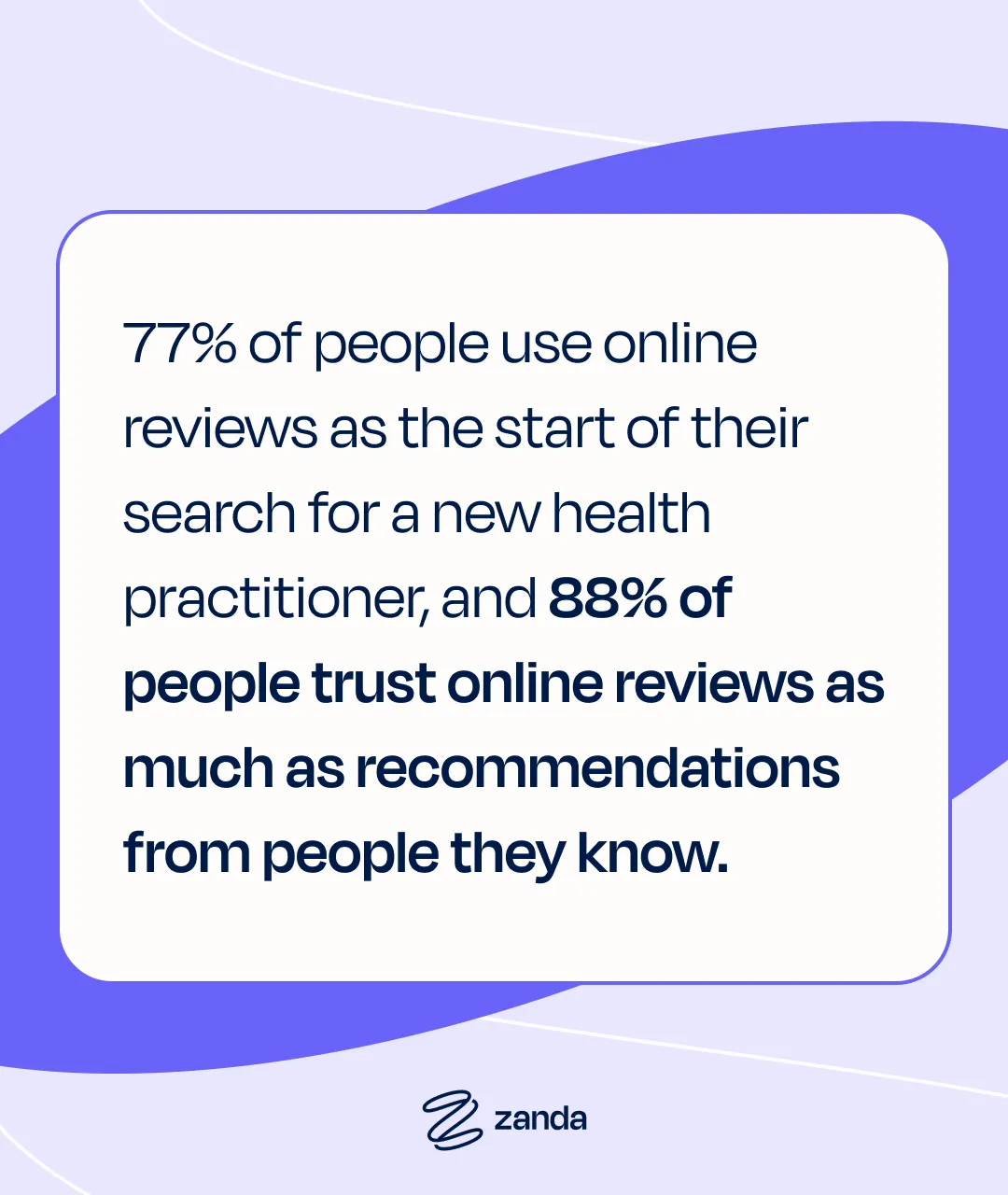
The internet has changed the way patients seek out new healthcare providers. In fact, 77% of people use online reviews as the start of their search for a new health practitioner, and 88% of people trust online reviews as much as recommendations from people they know.
As important as getting reviews can be, formulating replies to positive and (more importantly) negative reviews is just as essential. But, healthcare practitioners may be wary of doing so due to the Health Insurance Portability and Accountability Act (HIPAA).
Responding to people as a practitioner is not quite the same as responding as a retail store manager, and careful steps must be taken to ensure patient privacy. By replying, you’re showing patients that you truly hear what they have to say – positive or negative.
In this article, we discuss why it’s vital to respond to Google reviews, how to respond to them, and the best ways to manage Google reviews without violating HIPAA.
Where can you find patients’ reviews & feedback?
Often, patients leave reviews on sites such as Google My Business and Yelp. They may also leave reviews on your site if you have your own practitioner directory.
Some review sites and directories connected to you and your practice can keep you updated through notifications when a new review comes in. What’s important to consider, however, is that patients are more likely to turn to Google to see reviews on your practice.
According to a 2021 study, Google is one of the most trusted sites when looking for and leaving reviews.
If you haven’t set up a Google Business Profile yet, consider doing so sooner rather than later. Learn how to list your practice in our Google Business Profile article. Potential patients are looking for your practice – make it easy for them to find you!
Why is Google Business Profile important anyway?
Whether you practice in person or via telehealth, it’s essential that you maintain your practice’s online reputation.
When we think about how often we use Google to help us locate local businesses and services, it makes sense that you’d want your practice to appear in those results as well. Not only does your clinic or practice come up when a potential patient searches for ‘psychologist near me’, for example, but they’d also be able to see your business hours, address, contact details, and reviews.
Having all this information available instantly can make or break a potential patient’s decision.
Get all the information on Google My Business and extra tips in the Google Business Profile Tips article.
Google reviews for clinics vs. Google reviews for practitioners
Depending on how your practice is set up, patients may leave reviews in more than one place. Imagine this–a patient leaves a review on a clinic’s Google Business Profile, while providing additional feedback on an individual practitioner’s listing.
Understanding the difference helps you monitor reviews, respond consistently, protect patient privacy, and make the right decisions for your practice.
Clinic-level reviews
Clinic-level reviews live on your practice’s main Google Business Profile. They usually reflect the overall experience, including:
- Booking and scheduling
- Interactions with reception staff or practitioners
- Waiting times
- Billing
- The practice environment
Who this applies to:
- Multi-practitioner clinics
- Group practices
- Clinics with rotating practitioners or visiting specialists
What to keep in mind:
- Responses should come from the clinic, usually a practice manager or someone responsible for patient communication.
- Feedback often highlights system-level experiences, like workflows, front-desk processes, or scheduling.
- Your tone represents the whole practice, so aim for clear, calm, and consistent messaging.
Practitioner-level reviews
Some practitioners have their own Google Business Profiles, especially if they work across multiple locations or promote themselves individually. In cases like these, reviews focus more on the care experience, including:
- Clinical approach
- Communication style
- Bedside manner
- Treatment experience
Who this applies to:
- Solo practitioners
- Specialists working across several locations
- Practitioners building a personal brand
What to keep in mind:
- Decide who handles these responses, whether it’s the practitioner or a delegated admin.
- Privacy rules still apply, so avoid confirming the reviewer is a patient.
- These reviews offer valuable insight into individual patient relationships and clinical communication.
Why the distinction matters
Understanding the difference between clinic and practitioner reviews helps your practice:
- Assign responsibility for monitoring and responding to reviews
- Keep your communication consistent across all profiles
- Spot trends quickly, such as practice-wide issues or practitioner-specific themes
- Reduce confusion for prospective patients comparing options
How this plays out in different practice models
Multi-practitioner clinics and group practices
- Reviews may appear on both the clinic’s profile and several practitioner profiles.
- A simple internal workflow makes responding easier. Set out who replies where, expected response times, and how to manage sensitive feedback.
- A shared response guide helps keep the messaging aligned.
Solo practitioners
- Most reviews appear in one place, which makes them straightforward to manage.
- It’s still useful to distinguish between operational feedback and clinical feedback when looking for trends.
Why should you reply to positive and negative reviews?
Most patients expect to receive a response when a review is left. If your practice receives a positive review, responding is an opportunity to acknowledge and thank them for taking the time to leave a review that will boost your business. In turn, others are more likely to leave positive reviews as well.
If you receive a negative review, responding can give you the chance to mend what’s been broken. In doing so, you can continue carefully managing your ratings while ensuring that a patient’s concerns are heard.
Taking the time to respond to a negative review can ultimately work to your advantage. According to the review site Software Advice, 36% of patients will overlook a bad review if the review has been responded to carefully and thoughtfully.
Where does the hesitation to respond to Google reviews come from?
Healthcare practitioners may hesitate to respond to online reviews due to the fear of violating HIPAA laws and the blurred lines they cause regarding online engagement.
In healthcare practice, confidentiality and privacy when it comes to patients are an absolute must, so the fear of breaching those rules is entirely valid.
While patients may freely disclose information about their illness or treatment in a review, practitioners must be conscientious not to do so, as this could result in fines orother serious legal consequences in the most serious cases. This means that when responding to a review, care must be taken not to identify the patient, nor even confirm that the reviewer is/was a patient. (Yes, this applies even if the person has identified themselves and disclosed their status as a patient.)
There are, however, reliable ways to manage your online responses without the fear of disrupting practitioner-patient confidentiality and HIPAA laws.
Managing your responses to Google reviews
Responding to Google reviews doesn’t have to make you break out in a cold sweat. Here are some simple guidelines to manage your positive or negative reviews:
1. When you can, respond publicly
When you respond publicly, other patients will see that response. Therefore, ensure your answer to the review can be seen so that potential and current patients know that their concerns and comments aren’t going unnoticed.
2. Respond swiftly
A quicker response shows the patient that you value their feedback. Try to have the response posted within a day.
3. Be calm & thoughtful
Remaining calm and thoughtful in your words is especially important when it comes to negative reviews. It’s natural to want to argue your case against a negative review, especially when it may seem unfounded. But as a health practitioner, it’s in your best interest to remain calm and clear-headed.
Take a moment before responding. Most importantly, in the moments where you’re feeling apologetic, don’t directly apologize. Following patient privacy and confidentiality, keep your response as vague as possible. Don’t confirm a patient’s trip to your practice or any treatments they have had.
4. Get straight to the point
Keep your responses as brief as possible, especially in response to negative reviews. Rambling on in your response can make you appear defensive, which could quickly damage your reputation.
Examples of replies to positive and negative reviews
We’ve put together some example reviews you might receive online and how you can handle your responses to them to guide you through managing Google reviews.
Scenario 1 – Responding to a positive Google review
Replies to positive reviews are generally much easier.
A patient might say,
”A lovely and warm experience from start to finish. Appreciate Dr.’s bedside manner and clear explanations of treatment options. Great staff too! Highly recommended.”
An easy, simple response to this could be,
”Thank you for the wonderful feedback! Our staff is dedicated to doing our best, and everyone in the practice is proud of the work that we do.”
Scenario 2 – Negative Google review
While replies to negative reviews can undoubtedly be trickier, there are some catchall phrases you can use.
A patient might say,
”A total waste of time and money. The staff were unhelpful, and I only got in at 11
when my appointment was scheduled for 10!”
A straightforward response to this could be,
”We appreciate your feedback. We aim to make each patient’s visit as smooth and comfortable as possible, including seeing patients within 15 minutes of their appointment time. Please contact us at (insert number), so we can further investigate this issue.”
With positive reviews, just a mention of thanks is enough. With negative reviews, keep your responses vague and without direct fault, and move the conversation away from the online space as quickly as possible.
FAQ
Q: Can a practitioner respond to a review if it mentions their treatment?
Yes. Practitioners can respond, but they must avoid confirming the person is a patient or referring to any treatment details. Keep the reply general, protect confidentiality, and invite the reviewer to continue the conversation privately.
Q: As a practitioner, should I ask patients to leave a review, or should the clinic ask?
Most practices choose to have the clinic make the request. It feels more neutral for patients, reduces the pressure of a personal ask, and helps guide reviews to the correct Google profile. The laws, regulations, and professional guidelines relating to the use of reviews and testimonials can vary across jurisdictions and health professions. If you’re unsure of the rules that apply to you, your professional association is often a good place to start.
Q: How quickly should reviews be responded to?
Aim to reply within a day. A prompt response shows you’re listening and helps keep your online presence active and trustworthy.
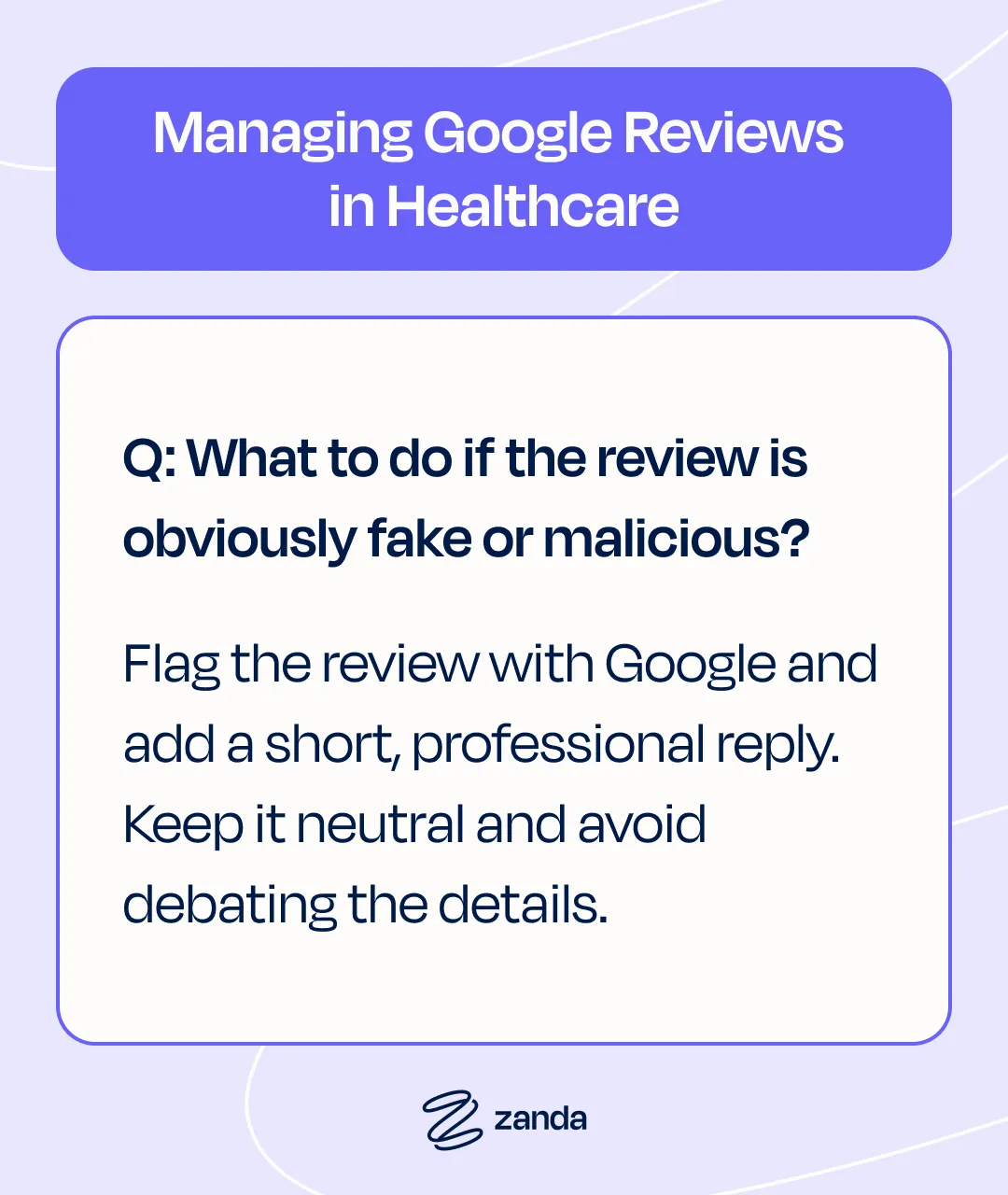
Q: What to do if the review is obviously fake or malicious?
Flag the review with Google and add a short, professional reply. Keep it neutral and avoid debating the details.
Google removes content that violates its policies, such as spam, impersonation, or hate speech.
Q: Does my personal practitioner profile show up separately in Google from the clinic?
Yes. If you have your own Google Business Profile, it appears separately from the clinic’s listing. Patients may see both profiles and can leave reviews on either one.
You can check this in a few different ways:
- Search your name on Google, for example, “John Smith physical therapist (city)”. If you have a practitioner profile, it often appears on the right side of the search results.
- Search the clinic name to see its own profile.
- Look at Google Maps by searching your name. Practitioner profiles sometimes appear as separate pins.
- Check Google Business Profile Manager if you have access: If both your name and the clinic show up as separate listings, you have two profiles. Each will collect its own reviews.
Q: Can I delete a negative Google review?
Not usually. Google only removes reviews that violate its policies, such as spam, fake content, hate speech, or something completely unrelated to your practice. If the review is legitimate, the best approach is to respond calmly, keep it general, and invite the person to contact the clinic privately. A professional reply often matters more than the review itself.
Q: How do I keep my responses privacy-compliant?
Keep your reply general and avoid confirming the person is a patient. Don’t mention any treatment details, dates, conditions, or anything that could identify them. A safe response thanks them for the feedback, acknowledges their experience in a broad way, and offers to continue the conversation offline.
Conclusion
While it may seem intimidating if you haven’t responded to reviews before, managing and responding to Google reviews is not only crucial, it’s easy once you get the hang of it. Always take a calm, measured approach, avoid addressing specific concerns, and double-check that your response is HIPAA compliant before you hit enter.
Remember that reviews are a big part of managing your practice’s online reputation. With careful responses, you can shape the perception of your practice, which can lead to more patients as your reputation grows.
Important note from our Legal Eagles: We know you know this, but we need to say it anyway. The information in this article is general in nature and is not legal advice. The laws, regulations, and professional guidelines relating to the use of reviews and testimonials can vary across jurisdictions and health professions. If you’re unsure of the rules that apply to you, your professional association is often a good place to start.