
How to Write a Therapy Treatment Plan (+ Template)

Therapy treatment plans often get lumped in with “admin” — another task competing for time at the end of a long day. For many practitioners, there may be pressure to rush or put them off until tomorrow. In serious cases, therapists meet with clients for several months before creating the treatment plan — if they make one at all.
This can be a detrimental mistake. Timely, well-devised treatment plans give sessions direction, keep progress visible, and create a shared understanding between practitioner and client about where the work is headed and why it matters. Furthermore, they’re often an essential component if a client is utilizing their insurance benefits for therapy.
At their best, treatment plans represent practical, collaborative tools. They help translate clinical insight into clear goals, guide decision-making over time, and support consistent, confident care without adding unnecessary complexity.
It may sound like a lot to manage, but it doesn’t have to be.
Below, we break down how to write an effective therapy treatment plan and share a ready-to-use template to make the process simpler and faster.
Before you start?
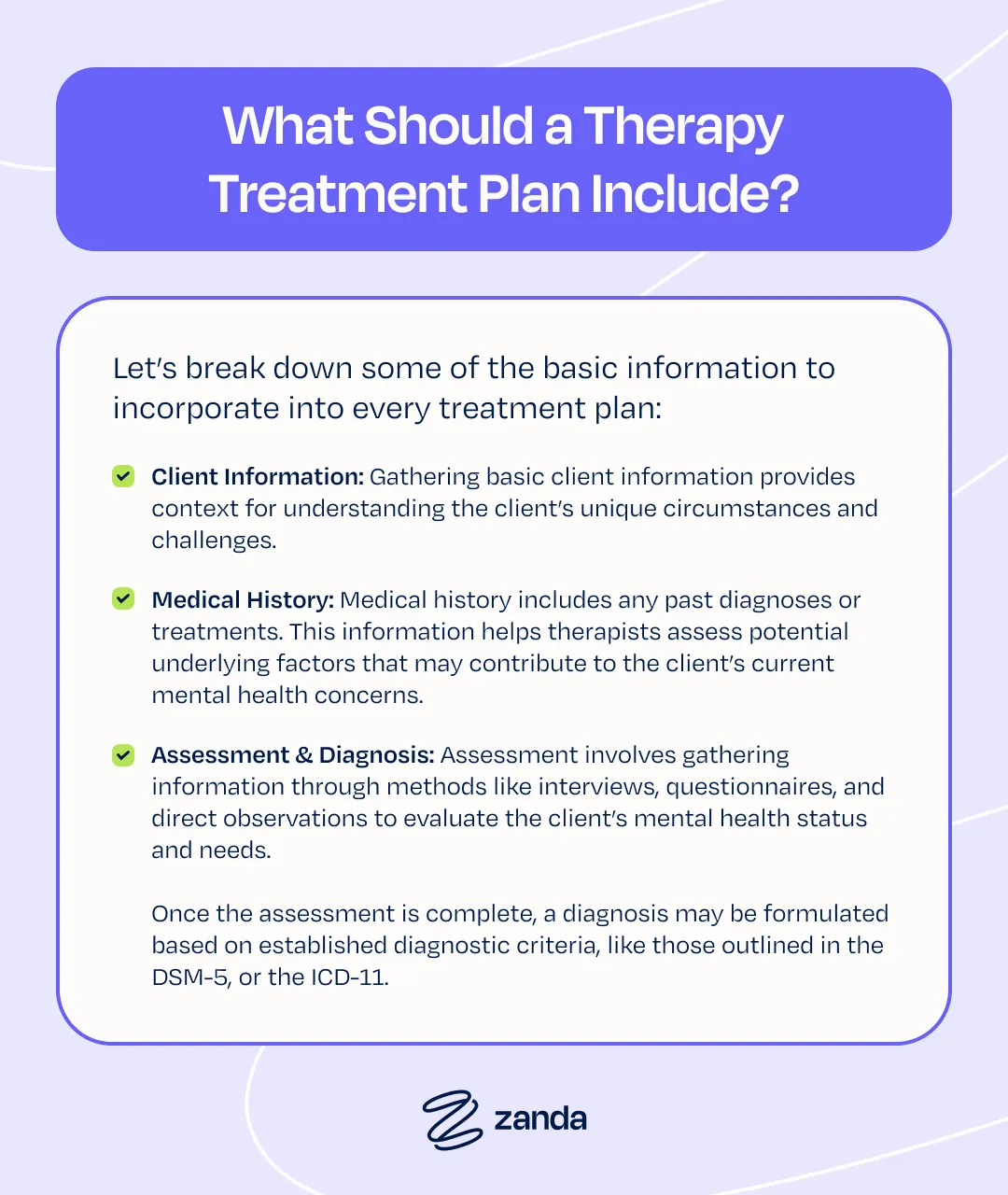
A therapy treatment plan needs to clearly convey the client’s presenting concerns and how therapy is intended to treat those concerns. While plans vary by practitioner and approach, a few core elements are required before you start writing. Most of this information will be collected during client intake and preliminary assessments. This information allows the practitioner to create an effective treatment plan.
Client information
Basic client information provides essential context for therapy. It helps practitioners understand the client’s circumstances and shape care accordingly.
Details such as age, gender, and cultural background may influence how therapy is delivered and experienced. Clear documentation of presenting concerns keeps the treatment plan focused on the issues the client wants to address and supports purposeful session planning.
Medical history
Medical history informs safe and appropriate treatment decisions. Past diagnoses, treatments, and relevant physical and mental health conditions can affect both presentation and progress in therapy.
Understanding factors such as previous trauma, depression, or anxiety helps practitioners consider potential influences on the client’s current concerns and plan interventions with greater confidence.
Assessment and diagnosis
Assessment establishes a clear clinical baseline. Practitioners gather information through interviews, questionnaires, observations, and other assessment tools to evaluate symptoms, history, and contributing factors.
Where appropriate, a diagnosis may be determined using recognized diagnostic frameworks such as the Diagnostic and Statistical Manual of Mental Disorders (DSM-5-TR) or the International Classification of Diseases (ICD-11). This step supports a focused, structured approach to treatment planning and goal setting.
It’s important to understand why the client is in therapy and what their goals are. Note the interventions you intend to use to support them in achieving those goals.
Core components of a treatment plan
A treatment plan follows a logical structure. Each section builds on the one before it, creating a shared understanding of the client’s needs and a practical framework for therapeutic work.
The components below help ensure the plan remains clinically useful, easy to review, and relevant over time.
1. Client information and background
Client information and background set the context for care. This section captures the details that influence how therapy is approached and experienced.
Demographic information, such as age, gender, and cultural context, helps practitioners consider factors that may shape communication, engagement, and treatment preferences. Presenting concerns describe the issues bringing the client to therapy, while psychosocial history adds insight into life circumstances, relationships, stressors, and supports.
Relevant medical and psychiatric history rounds this out. Documenting prior diagnoses, treatments, and health conditions supports informed decision-making and helps identify factors that may affect progress or risk.
2. Assessment and diagnosis
Assessment translates information into clinical understanding. Practitioners document the methods used to evaluate the client’s needs, such as interviews, standardized tools, observations, or screening measures.
As mentioned above, a diagnosis is recorded using recognized frameworks such as the DSM-5-TR or the ICD-10. Clinical impressions bring the assessment together by explaining how symptoms, history, and contextual factors inform treatment priorities and guide goal development.
This section provides the clinical rationale for the treatment plan and supports consistency across sessions.
3. Problem or need statements
Problem or need statements define the focus of therapy in clear, observable terms. They describe the difficulties the client is experiencing in a way that can be measured and reviewed over time.
Well-defined statements connect symptoms to functional impact, such as challenges in relationships, work, daily routines, or emotional regulation. This helps link assessment findings to goals and interventions, keeping the treatment plan practical and outcome-focused.
Here are a few examples of problem or need statements:
Client reports that their depression has impacted their grades, causing them to fail classes this semester.
Client indicates that they have had three panic attacks in the last month.
Client is experiencing PTSD symptoms, including flashbacks, stated hypervigilance, and avoidance of certain locations reminiscent of the traumatic episode. These symptoms began approximately two months ago.
Client states, “I don’t feel like myself lately. I just feel more disorganized and restless than usual. I’m not sleeping as well. I’m irritable. I don’t really know what it all means, but something is off.”
Goal-setting and objectives
Clear goals keep therapy focused and measurable. A structured approach helps both practitioner and client understand what progress looks like and how it will be tracked over time. One commonly used framework is SMART goals. SMART goals define outcomes in practical terms and support consistent review throughout the treatment process.
Using SMART goals in treatment planning
SMART goals describe what the client is working toward and how success will be measured.
- Specific goals clearly state the intended outcome, so there is no uncertainty about what is being addressed.
- Measurable goals include observable or trackable indicators that allow progress to be reviewed objectively.
- Achievable goals reflect the client’s current capacity, resources, and circumstances.
- Relevant goals align with the client’s presenting concerns and therapeutic priorities.
- Time-bound goals include a defined timeframe to support momentum and regular review.
Examples of SMART goals in a therapy treatment plan
Presenting problem: Anxiety
Specific: Client will reduce the frequency of panic attacks from three stated attacks per week. Measurable: Track panic attack frequency using a calendar or digital tracking tool. Achievable: Practice relaxation techniques, such as daily deep-breathing exercises. Relevant: Strengthen coping strategies to manage anxiety symptoms. Time-bound: Review progress after three months.
Presenting problem: Depression
Specific: Increase engagement in enjoyable activities by scheduling one activity per week. Measurable: Record activities and rate mood before and after each activity using an agreed scale. Achievable: Identify activities that are accessible and meaningful to the client. Relevant: Address reduced pleasure and motivation associated with depressive symptoms. Time-bound: Review progress after six weeks.
Presenting problem: Unresolved grief
Specific: Develop coping strategies to manage grief related to the loss of a loved one. Measurable: Rate grief-related emotional distress on a scale of one to ten during sessions, with a target reduction from eight to four. Achievable: Participate in weekly grief support sessions and practice agreed self-care strategies such as journaling or gentle physical activity. Relevant: Support emotional adjustment and day-to-day functioning following loss. Time-bound: Review progress after three months.
Treatment interventions
Treatment interventions describe how therapy will address the goals set out in the treatment plan. They specify the strategies and techniques the practitioner will use to support change, based on the client’s needs and circumstances.
Aligning interventions with treatment goals
Interventions work best when they directly support the goals identified during assessment and planning. Selecting approaches that align with presenting concerns helps target contributing factors and keeps therapy focused and purposeful over time.
Below are examples of commonly used treatment interventions.
Cognitive behavioral therapy (CBT)
CBT is a structured, goal-oriented approach that focuses on the relationship between thoughts, emotions, and behaviors. Practitioners support clients in identifying unhelpful patterns and developing practical strategies to respond in more adaptive ways.
Mindfulness techniques
Mindfulness-based interventions build present-moment awareness and encourage cultivating a non-judgmental response to thoughts, feelings, and physical sensations. Practices such as mindfulness meditation and body scan exercises support emotional regulation, stress reduction, and self-awareness.
Communication skills training
Communication skills training focuses on improving how clients express needs, listen, and respond within relationships. It is commonly used in individual and couples work to support skills such as assertive communication, active listening, and conflict resolution.
Exposure therapy
Exposure therapy is a behavioral approach used to treat anxiety, phobias, and trauma-related conditions. It involves gradual, planned exposure to feared situations or stimuli in a controlled setting, supporting clients to reduce avoidance and build tolerance over time.
Eye movement desensitization and reprocessing (EMDR)
Eye movement desensitization and reprocessing is a therapy approach used to reduce distress linked to traumatic or upsetting memories. Sessions involve recalling targeted memories while engaging in bilateral stimulation, such as guided eye movements or alternating sounds, to support adaptive processing and symptom reduction.
Session frequency and duration
Defined session frequency and treatment duration helps turn a treatment plan into a workable schedule. This section sets expectations for how often therapy will take place, how long sessions will run, and how the overall course of treatment is likely to unfold.
Clear scheduling supports consistency, helps clients plan realistically, and gives practitioners a framework for reviewing progress over time.
Example session schedule
Many treatment plans begin with regular, structured sessions to build momentum and establish therapeutic rapport. A common starting point is one session per week, with each session lasting 45 to 60 minutes.
The schedule may vary based on the client’s needs, goals, and availability. Some clients benefit from more frequent sessions during periods of acute distress, while others may begin with appointments every two weeks when concerns are more stable.
Example overall treatment timeline
Treatment plans often outline an initial timeframe for therapy, such as six to 12 sessions, before a formal review. This provides a defined checkpoint to assess progress, refine goals, and adjust interventions as needed.
Some plans focus on short-term, goal-oriented work, while others anticipate longer-term therapy. Documenting an expected timeline helps normalize review points and reinforces that treatment plans are living documents, not fixed commitments.
Adapting session frequency over time
Session frequency often changes as therapy progresses. As clients build skills and confidence, sessions may shift from weekly to bi-weekly or monthly check-ins. However, crises or other circumstances may warrant pivoting back to a higher frequency.
Treatment plans should note that frequency can be adjusted based on progress, emerging needs, or changes in circumstances. Regular review ensures the schedule continues to support therapeutic goals while balancing effectiveness, sustainability, and client capacity.
Therapy treatment plan example
Creating a treatment plan needn’t be time-consuming. Using a structured template helps streamline the process and ensures key information is captured consistently.
Templates provide a practical starting point and reduce the need to draft plans from scratch. Many practice management systems, including Zanda, offer configurable treatment plan templates that can be adapted to different practice types and clinical approaches. Downloadable templates can also support early planning or serve as a reference when refining your own format.

Below is an example of a full therapy treatment plan layout.
Client information Record essential details such as the client’s name, age, contact information, and relevant medical or mental health history. This information provides context and supports continuity of care.
Presenting concerns Document the reasons the client is seeking therapy, including symptoms, challenges, or areas of distress. Clear descriptions help focus the treatment plan and guide goal development. It’s ideal to use the client’s language when documenting presenting concerns. For example, you might write, “Client states, ‘I want to feel more like myself and more connected to others. I have been feeling so depressed lately.’”
Goals Set specific, measurable, achievable, relevant, and time-bound goals in collaboration with the client. Goals define what progress looks like and support regular review throughout therapy.
Interventions Outline the therapeutic approaches and strategies used to support the client’s goals. Interventions may include modalities such as cognitive behavioral therapy or mindfulness-based techniques, selected to align with the client’s needs and preferences.
Session frequency Specify how often sessions will occur and how long they will last. If the frequency may be irregular or erratic, note the reason why. Defined expectations support consistency and help clients plan for ongoing engagement in therapy.
Estimated treatment duration Include an expected timeframe for treatment, based on the client’s goals and progress indicators. While timelines may change, documenting an estimate helps set realistic expectations and supports structured review points.
Monitoring progress and collaborating with clients
Monitoring progress keeps a treatment plan relevant and effective. Ongoing review helps practitioners understand what is working, where adjustments are needed, and how therapy continues to support the client’s goals.
Why tracking progress matters
Evaluation and adjustment: Regular progress reviews help practitioners assess whether current interventions are supporting the intended outcomes. Tracking results makes it easier to identify what is working, address challenges early, and refine the treatment plan as needed. It is also often required by insurance companies or other third-party payors.
Accountability and motivation: Visible progress gives clients a concrete way to recognize change over time. Many people do not realize how much they have grown or evolved until reflecting on their earlier starting points. This supports accountability, reinforces effort, and helps maintain motivation. Acknowledging milestones can build confidence and sustain momentum.
Identification of patterns: Ongoing monitoring highlights trends in behavior, emotions, and thought patterns. These insights support deeper clinical understanding and inform future therapeutic decisions.
The role of collaboration in treatment planning
Client-centered approach: Involving clients in treatment planning and progress review encourages active participation and supports autonomy in the therapeutic process.
Shared decision-making: Collaborative monitoring creates a sense of partnership. Clients are encouraged to share feedback, raise concerns, and contribute to updates to the treatment plan as therapy evolves, strengthening trust and transparency.
Engagement and ownership: When clients feel involved in shaping their goals and strategies, they are more likely to stay engaged and committed to therapy. Collaboration supports a stronger sense of ownership over outcomes.
How to use a treatment plan template with your EHR
Using treatment plan templates within a secure Electronic Health Record (EHR) system helps keep documentation consistent, accurate, and easy to manage. Templates support treatment planning while keeping client records organized and accessible across the care team.
Practice management software like Zanda includes a library of configurable templates designed for different practice types and specialties. These templates provide a practical starting point, making it easier to create treatment plans that reflect each client’s needs without starting from scratch.
Benefits of using an EHR for treatment planning
Electronic health records (EHR) systems support more efficient, coordinated, and informed care by bringing treatment planning and documentation into one connected platform.
- Centralized information: EHRs store treatment plans, progress notes, assessments, and client details in one secure, HIPAA-compliant location. This supports continuity of care and allows practitioners to access complete records quickly when making clinical decisions.
- Improved efficiency: Electronic treatment planning reduces manual paperwork and streamlines administrative work. Automations such as appointment scheduling, online intake forms, and billing free up time for direct client care.
- Data-driven insights: Built-in reporting and analytics tools help practitioners monitor key practice metrics, including client activity and retention. These insights support informed decision-making and ongoing practice improvement.
A well-written treatment plan brings structure to therapy and focus to each session. It helps practitioners align goals, interventions, and reviews in a way that supports consistent, purposeful care and measurable progress over time.
When treatment planning is simple and well-organized, practitioners spend less time on documentation and more time with clients. Zanda helps make that possible with flexible templates, secure records, and tools designed to support the way health practices actually work.
Experience Zanda and see how streamlined treatment planning fits into a calmer, more efficient practice. Try it free for 14 days.
Frequently asked questions
Is a treatment plan required for all clients?
Specific treatment plan requirements vary by profession, jurisdiction, and payer. Many regulatory bodies, professional guidelines, and insurers expect a documented treatment plan when providing ongoing care. It can also be essential from a liability standpoint. You need to be able to document what you’re offering clients and why you’re offering it. Even when not strictly required, treatment plans support clear goal-setting, continuity of care, and consistent clinical decision-making.
How often should treatment plans be updated?
Treatment plans should be reviewed regularly and updated when goals are met, circumstances change, or new information emerges. Common review points include set session intervals, changes in presentation, or formal progress reviews. Regular updates help ensure the plan continues to reflect the client’s needs and therapeutic direction.
Can treatment plans be used for insurance documentation?
Treatment plans are often required to support insurance claims and audits. Professional documentation of goals, interventions, and progress can help demonstrate medical necessity and support reimbursement requirements. Practitioners should ensure treatment plans meet the specific documentation standards of relevant insurers and regulatory bodies.
Do treatment plans need to be shared with clients?
Sharing treatment plans with clients is often recommended and, in some settings, required. Reviewing the plan together supports transparency, shared understanding, and informed consent. It also helps clients stay engaged by clearly outlining goals, expectations, and how progress will be reviewed over time.