

Halaxy vs Zanda: The Best Halaxy Alternative for Allied Health Practitioners
Why users look for a Halaxy alternative
When it comes to handling patient data, allied health practitioners need a platform that puts privacy first. Halaxy’s privacy policies can feel unclear, especially for clinics that must meet APHRA, HIPAA, or GDPR standards. It’s a key reason practitioners begin looking beyond Halaxy for practice management.
Zanda is built with privacy at the core, offering full compliance and secure data storage you can trust, whereas Halaxy’s privacy policy indicates that data might be shared. On top of that, Zanda includes a suite of automations that go beyond the basics – covering intake, billing, recalls, and more – while Halaxy only automates post-appointment tasks. Add built-in AI features for smarter decision-making, and Zanda simply offers more control, transparency, and peace of mind at an affordable cost.
Every clinic works differently, but patient confidentiality, support, and easy-to-understand data practices should be non-negotiable. That’s why we take time to compare Zanda with other platforms. If you’re an allied health practitioner searching for the best alternative to Halaxy, this breakdown cuts through the noise to help you make a confident, informed choice.
Before we dive in, let’s deal with the elephant in the room. Halaxy is a Zanda competitor. To avoid accusations that we’re interpreting their Privacy Policy (PP) in an out-of-context manner, we’ve attached a full copy of the Halaxy Privacy Policy (from their website in August 2025) so you can review it and form your own opinion.
There are concerning differences regarding how Halaxy can use your clients’ health data.
We’re highlighting the Halaxy Privacy Policy because it contains clauses we think most practitioners and patients wouldn’t expect to find. In fact, we haven’t found clauses like these in any other commonly used competitors in the marketplace.
So what’s actually in the Halaxy Privacy Policy?
The Halaxy Privacy Policy starts out with a fairly standard introduction, and reinforces the notion that by providing personal information, you consent to Halaxy using it in the manner described in that policy. This is all pretty standard.

Data collected
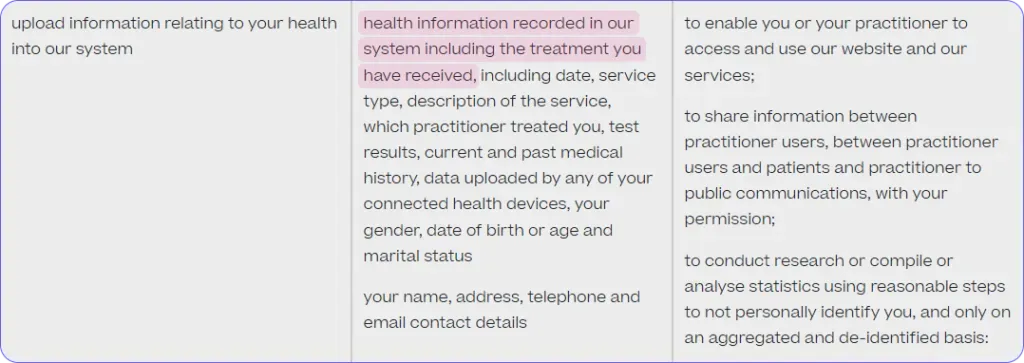
It then goes on to list the type of personal information Halaxy may collect. Again, this list is fairly standard for a practice management system. However, it’s important to note that the personal information collected may include health information entered into Halaxy by a patient or practitioner, including:
- “..the treatment you have received…;
- …service type, description of the service…;
- …which practitioner treated you…;
- …test results…;
- …current and past medical history”.
Permitted purposes of use
Halaxy’s Privacy Policy then outlines the full range of permitted purposes under which it can use and/or disclose the Personal Information entered into its system. Among the standard uses that might be expected, a number of purposes are included that we think neither practitioners nor patients would reasonably expect or knowingly consent to. This includes:
- “…conduct research or compile or analyse statistics relevant to health or safety;
- “to prepare aggregate reports for current or future advertisers, sponsors or other partners”;
- “to send you marketing and promotional messages…sent by…our business partners…”.
You can see a more details in this screenshot of the policy:
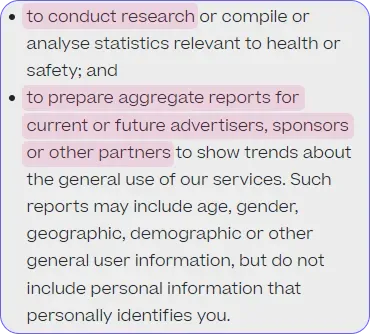
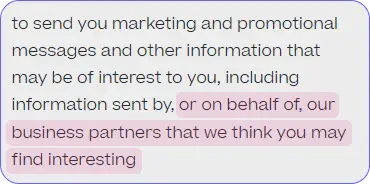
In other words, the Halaxy Privacy Policy appears to give it permission to access, use and disclose individually identifiable medical information that has been entered into its system for purposes that include medical research, marketing, advertising or other commercial activities. Furthermore, there does not appear to be any requirement for Halaxy to notify practitioners or patients when data is used for these purposes, who patient data has been provided to, or any mechanisms for practitioners or patients to prevent the further use of their data once it has been provided to third parties.
What about patient consent? Who is responsible?
To understand this we need to look at Halaxy’s overall Privacy Policy.
The answer to the consent question appears to be contained in the section ‘Information of another individual’:
“…you must take reasonable steps to ensure the individual concerned is aware of and/or consents to the various matters detailed in this Privacy Policy…”
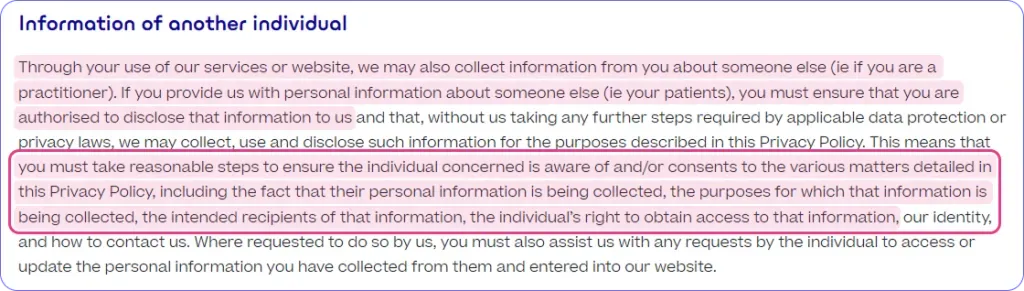
Put simply, this appears to indicate that if you’re a practitioner using Halaxy, you agree that you have made your patients aware of how Halaxy can use patient health data, and you have obtained patient’s consent for this.
This appears to be further emphasised in Halaxy’s Privacy Policy, where it states that if you are using Halaxy and providing information to it about someone else, i.e. entering patient treatment information, “you must ensure that you are authorised to disclose that information to us and that without us taking any further steps… we may collect, use and disclose such information for the purposes described in this Privacy Policy.”
While there are also circumstances where patients can provide consent to Halaxy’s Privacy Policy directly, i.e if they were to register directly on the system, it would appear that failing this, it is the practitioner who enters patient data into Halaxy that is attesting to the fact that they have obtained their patients’ consent for Halaxy’s subsequent use of their data.
We believe this is an unreasonable expectation and unfair to put that onus of responsibility onto practitioners or practice managers.
Is Halaxy different from other PMS providers?
In short, yes.
In our review of practice management systems, we found that nearly all of them, including Zanda, operate something like this:
Fees
There is almost always a base subscription fee, plus additional fees for extras such as SMS use, payment processing etc.
Data use
Patient health data entered is considered to be the exclusive property of the practice. It is only used by the PMS in a manner you’d reasonably expect as part of operating a practice management system. The Privacy Policies don’t allow accessing or using patient data for other commercial or research purposes. Halaxy’s Terms and Conditions, Privacy Policy, and its pricing model indicate a very different approach:
Free plus fees for extras
Halaxy promotes its software as “free”, with costs only applying to additional features like SMS, payment processing, and other extras. However as the saying goes:
“If you’re not paying for the product, then you are the product.” -Tristan Harris
Offering free software in exchange for people’s personal data is not new, and not necessarily a bad thing – but it’s essential for users to make informed decisions. Most people use free services like Google, Facebook, Instagram, and understand their data is used for advertising and other purposes. But in these cases, people are making the decision themselves – with Halaxy, the responsibility lies with the practice to inform each client and give people the option of whether to go ahead with their service or not.
Halaxy advises users they “are building the largest, most unique health longitudinal datasets in the world” and that by using Halaxy, they’re “contributing” in exchange for “access” to the system.
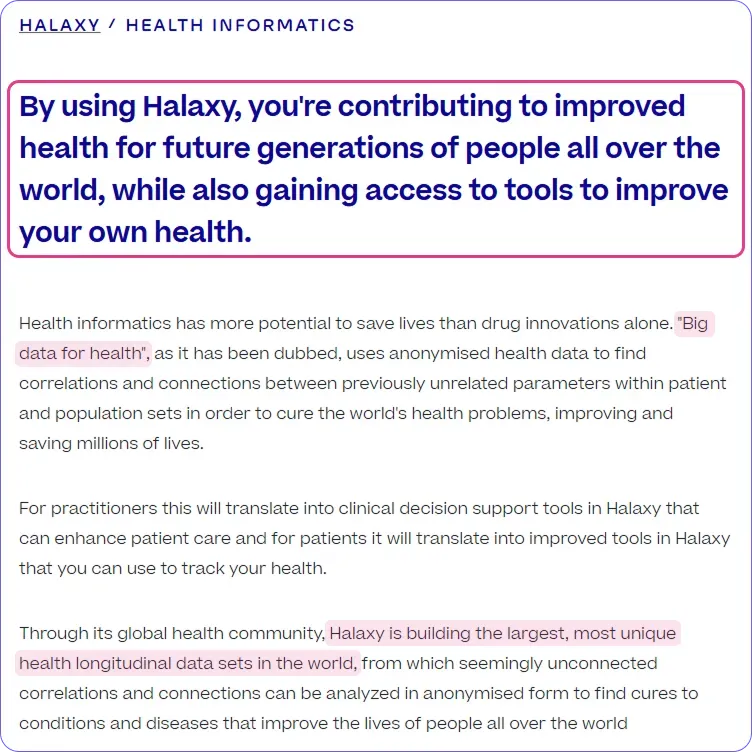
In our view, this doesn’t make it anywhere near clear enough that Halaxy can use and disclose patient data for a much wider range of purposes. Furthermore, the onus of gaining consent for that data use primarily lies with the practitioner – which is unreasonable and impractical.
Concerned? What should you do?
Start by reading the full Halaxy Privacy Policy and decide for yourself whether it meets your expectations, and the expectations of your patients. If you’re not sure about any element, seek the opinion of a legal professional who specializes in healthcare, and follow their advice.
Halaxy vs Zanda at a glance
Get a clear view with this comparison of Zanda and Halaxy. Find out which platform gives you more control with better support and peace of mind.


*This comparison article reflects information available as of June 2025.
Meet Zanda – built for allied health success
Thinking about switching? Zanda is the all-in-one platform allied health professionals turn to when it’s time to replace Halaxy. Built for real clinic workflows, we make practice management simpler, smarter, and genuinely aligned with how allied health professionals work.
Users
Invoices per month
Client notes a month
FAQs
We know switching platforms is a big decision. Here are the common questions we hear most often from allied health professionals thinking about replacing Halaxy.
While it’s true that Zanda operates in a competitive environment, we include other competitor comparisons on our website that, in our view, don’t raise the same Privacy Policy concerns as Halaxy. If someone is concerned about Halaxy’s Privacy Policies, there are many other practice management systems to choose from.
These bodies don’t regulate practice management software companies–they regulate practitioners. They set guidelines for choosing suitable software systems, but full responsibility lies with the practitioners to select software that meets their requirements.
Use of Client Data for Marketing: We’ve had several practitioners state that they’ve been in contact with Halaxy and have been advised that their client data is not being used for marketing purposes. Concerningly, in their responses, Halaxy has also cited scenarios where practitioners would normally expect data to be shared (i.e. use of an integration) to justify clauses that allow the provision of data to third parties for much broader purposes. While we’re pleased to hear Halaxy’s claims that they’re not using client data for marketing purposes, we will remain very concerned until Halaxy updates their official Privacy Policy and Terms of Use to remove these allowed uses. If there is truly no intention for Halaxy to ever use client data for marketing or other commercial purposes, it’s hard to understand why they wouldn’t simply update their policies to reflect this. Use of Client Data for Research: It’s also notable that in their responses to practitioners, Halaxy doesn’t appear to address the concerns raised in this article regarding the use of client data for medical research purposes. While there are of course many noble research projects with high ethical standards, there are also many more for-profit medical research projects with commercial objectives. Halaxy’s policies do not limit or specify the types of research that clients’ data can be used for. But more importantly, if clients are to participate in any medical research, they should be giving their individual, explicit, and informed consent for this. And the onus of this responsibility should not fall to practitioners (as it does currently according to Halaxy’s policies).
Compliance & security: certified protection for modern practices
Built for privacy-first care, Zanda is a secure alternative to Halaxy that meets global healthcare compliance standards. ISO 27001 certified and compliant with The Privacy Act, HIPAA, and more, it safeguards patient data and supports practices that value security.

Rigorous Security Standards
We’re dedicated to providing a safe digital environment that meets and often exceeds industry best practices and regulatory standards. Every step of our data migration process is designed to prevent unapproved access or data leakage.
Expertise Meets Security
Each data migration team member understands the sensitivity of the information they handle. They adhere to a strict code of conduct and follow rigorous security protocols to ensure the confidentiality and safety of your data.
Compliance
Zanda complies with global data protection standards, including ISO 27001, GDPR, HIPAA, and Australia’s Privacy Act. We align our data handling practices with these protocols, providing an extra layer of assurance about our commitment to data security.
Data Integrity
As we transfer your data, we work to maintain its accuracy and consistency. Post-migration, we conduct thorough quality checks to verify the integrity of the imported data.
Continuous Improvement
We believe in continuous improvement and adaptation. As technology evolves and new threats emerge, we adjust our security measures accordingly.
The Zanda Difference
When you make the move to Zanda, you’re opting for a superior practice management system with unparalleled data security.
What practitioners are saying
Seamless switching: Support & onboarding
The transition from Halaxy to Zanda is straightforward. We handle the heavy lifting so you can switch with confidence and keep your focus on care.
Free data import service
Transfer your practice data securely and accurately. We’ll take care of the import so nothing gets left behind.
Data ImportPersonalized Onboarding
Book a walkthrough with our team to get set up correctly. We’ll tailor the process to fit your clinic’s needs.
Book a TimeResponsive Support
Get help promptly from a team that understands allied healthcare. Our Customer Success Team is dedicated to helping your practice thrive.
Contact UsAcademy
Learn at your own pace with step-by-step guides and videos. Get practical help with features, workflows, and time-saving tips.
AcademyProfessions we serve

















Limited Time: No Subscription Fees and 500 SMS Credits
Start your plan by September 30th to pay no subscription fees* until November and get 500 free SMS credits.
*For new users only. Some add-ons have additional costs. Dedicated numbers are required for US and Canadian practices.
Ready to switch from Halaxy? Start your free trial today
If Halaxy is holding your clinic back, switching to Zanda is a smart move. Built for healthcare workflows with easy-to-understand policies and reliable support, it’s the best alternative to Halaxy with no hidden trade-offs. Claim your free trial to get started.