How to Market Yourself in Allied Health

The following is an excerpt from The 9 Secrets of Successful Health Practices, written by psychologist and Zanda Co-founder Damien Adler.
Before you give a talk, attend a networking event, or meet with a potential referrer, take the time to refine how you introduce yourself and your practice. This simple step can make all the difference in whether someone remembers you and refers to you.
Consider the difference between these two conversations:
Patient: “I’ve been feeling anxious about some big changes in my life.”Doctor: “You should see a therapist.”
Now compare that with:
Patient: “I’ve been feeling anxious about some big changes in my life.”Doctor: “I know a great therapist who works specifically with people navigating career transitions. They also offer after-hours appointments, so you won’t need to miss work.”
Which one sounds more helpful? Which therapist is more likely to get the referral?
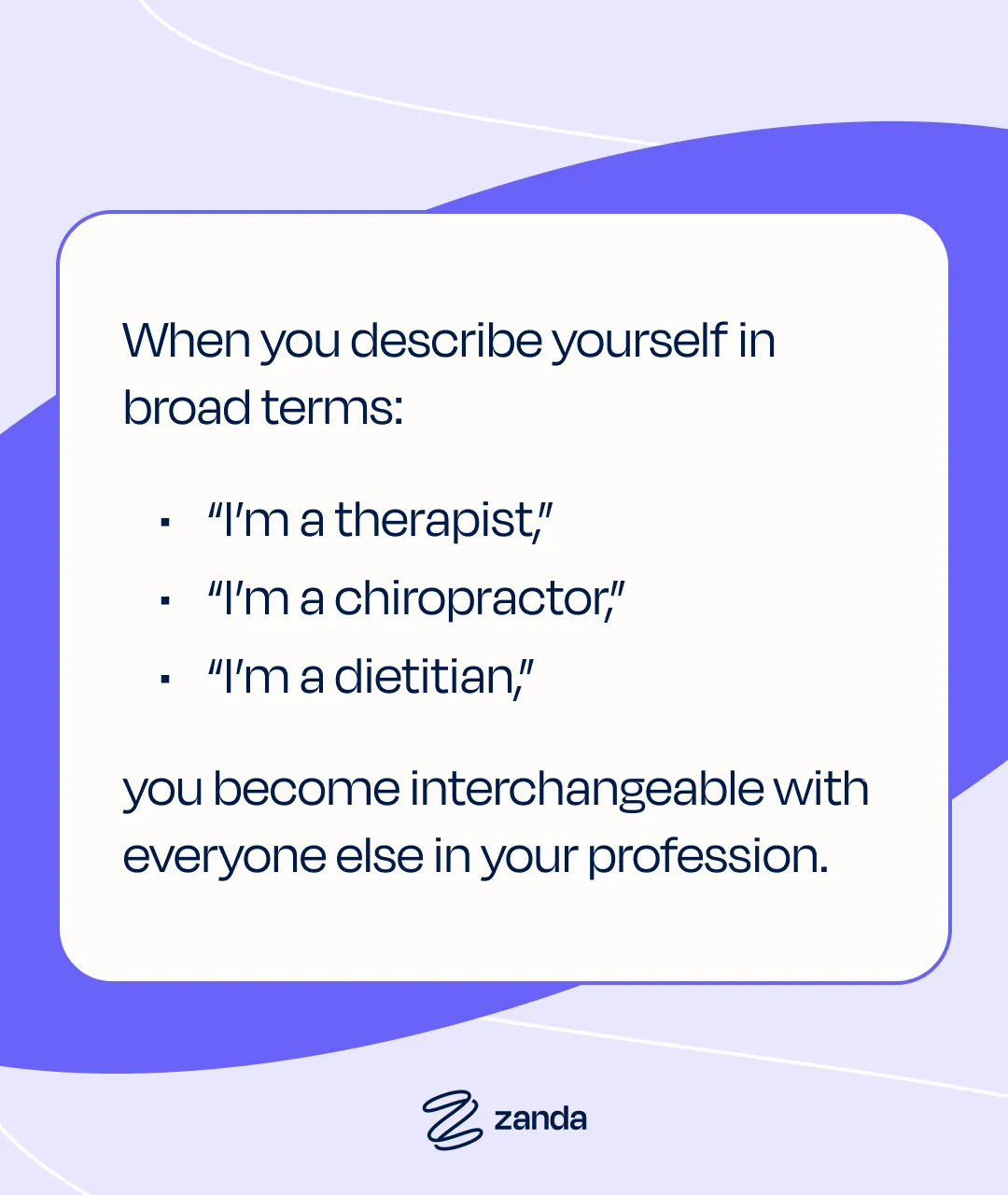
When you describe yourself in broad terms, “I’m a therapist,” “I’m a chiropractor,” “I’m a dietitian,” you become interchangeable with everyone else in your profession. But when you share what sets you apart, your specialty, your approach, or the specific needs you help address, you stand out. That’s the key to good marketing: helping others quickly and clearly understand what makes you different and why you’re the right fit for a particular patient.
This doesn’t mean you need a slick sales pitch. It just means knowing how to talk about what you do in a way that resonates with the people you’re trying to help. It makes it easier for potential referrers to remember you and to connect the dots between their patients’ needs and the unique value you offer.
Before you start putting together brochures, websites, or presentations, start here. Be clear about who you help, how you help them, and what makes your practice the one they’ll want to recommend.
Consider what makes you stand out
Sometimes the things that set you apart are so second nature that you don’t even think to mention them. That’s why identifying your unique value can take a bit of reflection. But once you do, it becomes much easier to articulate what makes your practice different and more memorable to referrers and potential patients.

Start by answering questions like:
- What local areas or communities do you serve?
- Do you work with a specific population or age group?
- What unique skills, certifications, or modalities do you offer?
- What lived or professional experiences give you insight others don’t have?
- Are there cultural, language, or accessibility strengths that you or your team bring?
- Do you offer flexible appointment times (e.g., evenings, weekends)?
- Do you provide in-home, telehealth, or mobile services?
- Have you helped clients through particular challenges that you’re especially passionate about?
- Are you using any innovative tools, programs, or frameworks in your practice?
Once you’ve reflected on these, try weaving them into a short “elevator pitch” a simple, confident way to explain who you are, who you help, and how. You won’t need to use this word-for-word every time, but having it in your back pocket will make it much easier to talk about your work in a way that feels natural and impactful.
Your pitch can also serve as a foundation for your referral letters, online bio, or marketing materials. It’s not about over-selling. It’s about helping others understand how and when you’re the right person to help.