
How to Start a Private Massage Therapy Practice: From Setup to Growth
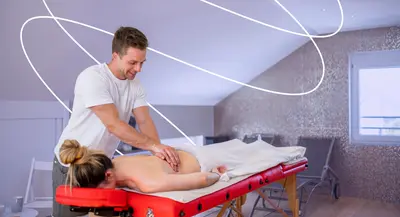
You finish a shift at the spa and three of today’s clients asked if they could book with you directly next time. The demand is yours, but the practice isn’t. For a lot of therapists, that’s the moment the question shifts from “should I” to “how to” start a private massage therapy practice.
Massage therapy is no longer seen as an occasional luxury. Clients are turning to massage for stress relief, recovery, pain support, and better day-to-day mobility. And it’s becoming more connected to wider healthcare through referrals from chiropractors, physical therapists, and other providers.
This creates a strong opportunity for therapists ready to move from spa work into independent practice. But knowing how to start a private massage therapy practice means preparing for a different kind of responsibility. You’re still doing physical and emotionally present work, but now you’re also managing the business around it.
This guide gives you a practical checklist for the business side, so your practice has the structure it needs to support the healing work.
Preparation: the foundations of a massage therapy business
Before you open your doors, you need to understand and choose a business model that makes sense for you.
Choosing your business model
Your business model influences what private practice looks like in real life. A mobile massage service gives you lower overhead and more flexibility. The tradeoff is the time you lose between appointments, which can limit how many clients you see in a day.
A dedicated studio gives you more control over the client experience, though it usually comes with higher monthly commitments. Subleasing a room in a wellness center can be a good middle ground, especially when you’re still building demand. You get a professional setting without taking on a full lease, and there may be opportunities to connect with other practitioners in the same space.
You’ll also need to decide whether you’re working within someone else’s business or setting up your own. As an independent contractor, you may rent space, take bookings through a clinic, or serve clients under another provider’s policies. As a solo proprietor, you run the practice yourself, which means you manage the setup, client relationships, and business obligations directly.
The right choice depends on how much control you want and how much responsibility you’re ready to take on.
Licensing and liability for massage therapists
Before you take paying clients, check the exact licensing rules where you plan to practice as massage therapy requirements vary by state, province, or country. In the US, the National Certification Board for Therapeutic Massage and Bodywork (NCBTMB) provides national board certification and continuing education opportunities. In the UK, there are no official qualifications to become a practicing massage therapist, however the General Council for Soft Tissue Therapies (GCMT) sets standards for the profession and provides training. In Australia, you must complete a nationally qualified massage therapy program and register with an industry association.
Liability cover is just as important as your license. Professional liability insurance helps protect you if a client claims they were injured during treatment or raises a complaint about your care. The American Massage Therapy Association (AMTA), Associated Bodywork & Massage Professionals (ABMP), or an equivalent body in your region can be useful starting points when comparing cover.
Guessing can become expensive down the line, so get the requirements in writing from the relevant authority, keep copies of your documents, and review your coverage before you start taking bookings.
Financial planning and massage therapy startup costs
A massage practice can start with relatively low overhead, but that doesn’t mean it should run on rough estimates. Your main early costs will depend on the model you choose. A mobile practice may need a reliable portable table, while a studio setup usually requires more investment before the first client books.
Massage is physical work, so your setup needs to protect your body as well as support the client experience. Poor equipment can make each session harder than it needs to be, especially once your schedule starts filling up.
Your massage therapy business plan doesn’t need to be long or formal at this stage. It should clarify who you want to treat, how often you need clients to book, and what each session needs to earn for the practice to stay financially realistic. A therapist focused on sports recovery may make different decisions from someone building a prenatal or chronic pain practice.
This is also the point to look honestly at the expected massage therapist startup costs before you commit. Include the essentials, leave room for slower early months, and avoid building a cost base that puts pressure on every appointment.
Operations: running a massage therapy practice day-to-day
Operations are where your planning becomes visible to clients. The goal is to create a calm, professional experience without making the work harder behind the scenes.
Designing the client experience
Clients notice the room before they notice your technique. Lighting, temperature, sound, and scent all influence how quickly someone feels able to settle into the session. The aim isn’t to create a spa cliche, but to design a space that helps the nervous system shift out of alert mode.
Hygiene should feel just as intentional as the atmosphere. Fresh linens, cleaned surfaces, and well-maintained equipment give clients quiet reassurance that the practice is being run properly. Follow the relevant guidance from the Occupational Safety and Health Administration (OSHA), or your local equivalent, so sanitation becomes a standard part of how the practice operates.
Massage equipment and inventory management
An ergonomic electric table can make positioning easier and reduce strain during a full day of treatments. If that isn’t realistic at first, choose a table that adjusts well and doesn’t force you into awkward working positions.
Oils, lotions, towels, and laundry supplies need a simple tracking system once client volume increases. Track what you use each week, so you know when to reorder before low stock starts affecting the client experience.
Plan supplies around the treatments you offer. A sports recovery practice may use products differently from a relaxation-focused studio, and your stock should reflect that.
Streamlining the studio
When you’re in session, you can’t stop to answer calls or manage booking requests. Online booking gives clients a way to schedule at a time that suits them, while you stay focused on the treatment in front of you. For a solo practitioner, that kind of access is crucial because missed calls can easily become missed revenue.
The more clients you see, the more those small admin tasks start competing with treatment time. The right massage practice management software brings those tasks into one place. With Zanda, clients can book online, receive automated reminders, and update appointment details without creating extra back-and-forth. It keeps the client experience professional without forcing you to manage every small task manually.
Documentation also needs to fit the pace of a massage practice. The mobile-friendly templates in Zanda help you complete massage therapy SOAP notes shortly after a session, while the treatment is still fresh in your mind. You can record palpatory findings and link them to the treatment plan without relying on scattered paper notes.
Automated reminders are especially useful when your schedule starts filling up. SMS alerts help reduce no-shows so you have fewer empty slots and can spend less time sending reminders.
Growth: marketing your massage therapy practice
Once the practice runs well, growth becomes less reactive. Marketing for massage therapists works best when it builds trust in a way that feels professional rather than pushy.
Setting professional boundaries in your massage practice
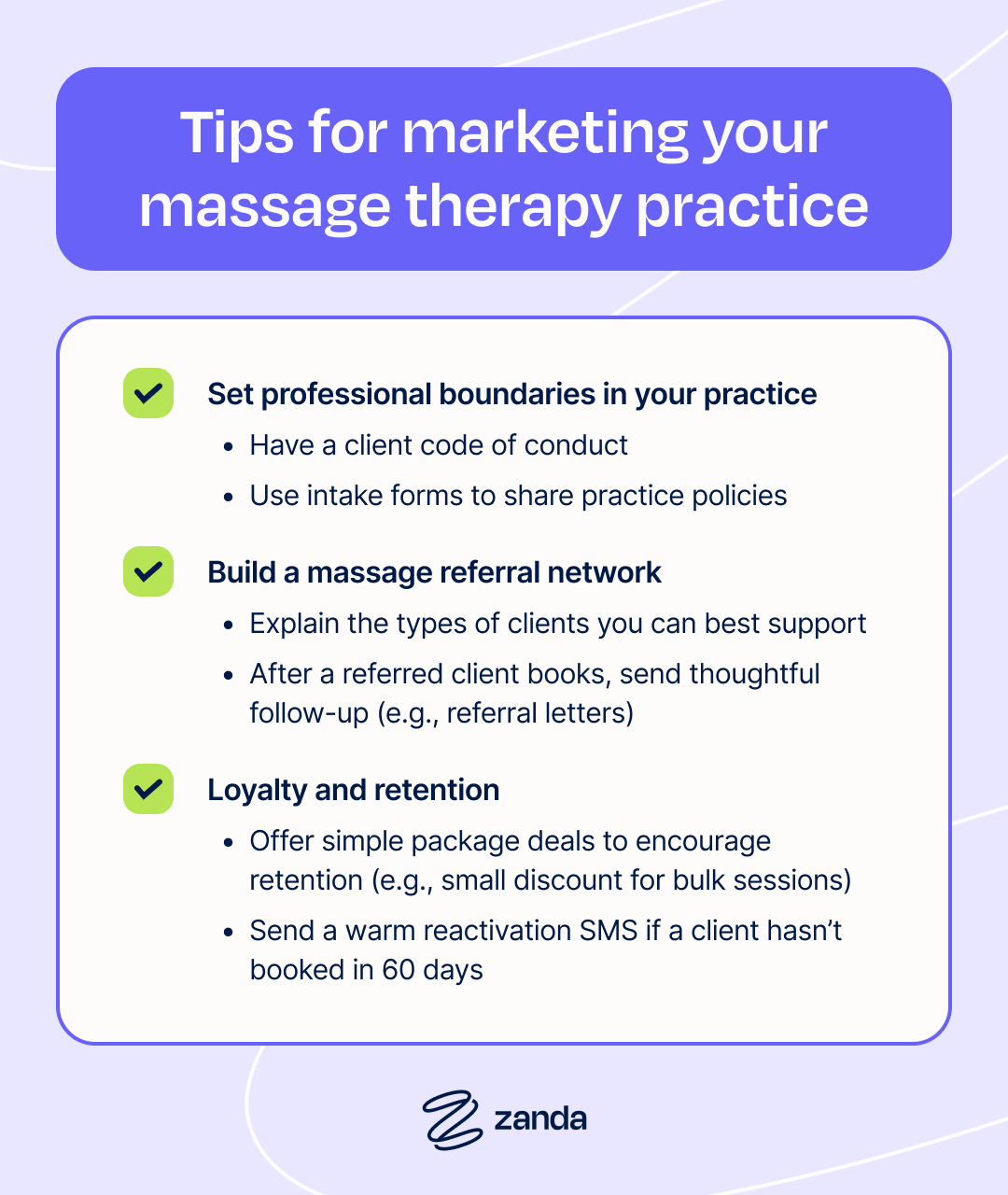
Clear boundaries make clients feel more confident, not less welcome. A client code of conduct helps set expectations around arrival times, draping, communication, and inappropriate behavior before there’s any room for confusion. It also gives you a clear reference point if you ever need to decline or end a session.
Set those expectations before the client enters the room. Intake forms can ask the right questions about health history, treatment goals, consent, and comfort levels, while also giving space to share practice policies. With online forms in Zanda, you can collect that information ahead of time and keep it linked to the client record.
This kind of preparation protects the tone of the appointment. Instead of handling sensitive topics in the moment, you can start the session with a clearer understanding of what the client needs and what your practice will not compromise on.
Building a massage referral network
Referral relationships work best when they feel useful to both parties. Local chiropractors, physical therapists, and gyms may already see people who could benefit from massage as part of their recovery or maintenance routine. The key is to be specific about where your work fits, rather than vaguely asking for referrals.
When you connect with another provider, explain the types of clients you’re best placed to support. A sports massage therapist, for example, may be a good fit for gym members managing tightness from training. A therapist focused on chronic pain may build stronger links with clinics that already support people through longer recovery journeys.
After a referred client books, thoughtful follow-up can strengthen the relationship with the original provider. With Zanda, you can use referral letters to keep healthcare providers informed about progress, treatment focus, and any relevant follow-up. That kind of communication helps other providers see you as part of the client’s wider care, which can make future referrals feel more natural.
Loyalty and retention
Retention works best when it reflects how clients actually use massage. Some people book when pain flares up, while others benefit from a regular treatment routine. Package deals can make recurring care easier to commit to when the client already understands the value of coming back.
Keep packages simple. A small discount for bulk sessions can encourage repeat bookings without training clients to wait for promotions. It also gives the practice more predictable income, which makes it easier to plan your available treatment hours.
Reactivation is another useful habit. If a client hasn’t booked in 60 days, a short “thinking of you” SMS can bring your practice back to mind without feeling pushy. Keep the message warm, specific, and easy to act on, so the next step feels like a thoughtful check-in rather than pressure to book.
Additional considerations: building a sustainable massage practice
A full calendar can look like progress, but it can also create pressure. Longevity comes from building the practice around what you can physically sustain.
Self-care for massage therapists
Your body is part of the business, so recovery time has to be planned with the same seriousness as client appointments. Use recovery blocks in your Zanda calendar to protect breaks between heavier sessions or after physically demanding days. Without protected recovery time, it’s too easy to fill every open slot and treat rest as optional.
Continuing education can also support longevity, especially when it helps you work with more precision. Modalities such as lymphatic drainage or myofascial release can expand the types of clients you serve and increase the value of each session. Choose training that fits the direction of your practice, rather than collecting certifications that don’t meaningfully influence your client work.
A sustainable massage practice is built around good boundaries with yourself as well as clients. The goal is to stay capable enough to keep doing high-quality work.
Turn clinical skills into a sustainable massage therapy practice
Starting a massage business means making sure clinical care and business systems support the same practice model. Clinical skill brings people into the treatment room, but strong systems help the practice keep running once bookings, notes, reminders, payments, and follow-up become part of your daily workflow.
Use this independent massage therapist guide as a starting point, then adapt each decision to the way you want to practice. A better setup makes the business side feel less scattered. When your systems support the way you work, you have more space to focus on the quality of each session and the client relationship behind it.
Zanda helps massage therapists manage the admin around client care, from online booking and reminders to notes, forms, invoicing, and referral letters. It keeps the practical side of private practice easier to manage as your client base grows.
Ready to run your practice with less admin? Start your 14-day free trial with Zanda today.